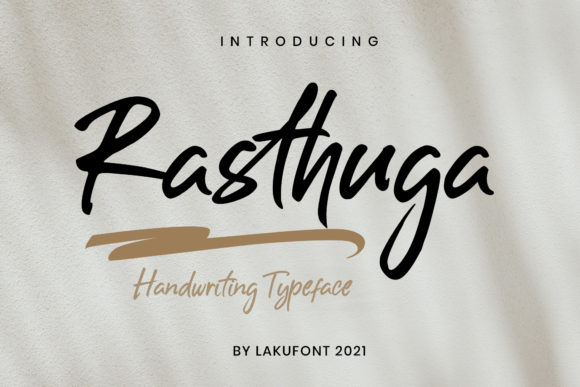
Rasthuga Font for Modern Web Design and Brand Identity
I was staring at a blank hero section on a client’s boutique coaching website, trying to balance professionalism with warmth. The layout was clean, but it felt sterile. I needed something that could bridge the gap between corporate credibility and personal connection without breaking the visual hierarchy. That was when I pulled up Rasthuga, a stylish and flowing handwritten font that promised to add a sweet touch to your digital projects. Testing it in the browser immediately changed the mood of the page. It wasn’t just about aesthetics; it was about how the typeface influenced the user’s emotional response to the brand.
Rasthuga as a Display Typeface for Hero Sections and Landing Pages
When evaluating Rasthuga, the first thing I noticed was its behavior as a display font. In web design, the hero section is prime real estate, and using a standard sans-serif can sometimes feel too utilitarian for creative brands. This versatile script font has a wide range of applications ranging from greeting cards to kids’ crafts, which suggests a playful yet polished nature. However, in a professional context, it shines when used sparingly for headlines or short phrases. I placed Rasthuga over a soft, blurred background image for a course sales page. The flowing curves caught the eye, guiding the user’s gaze toward the call-to-action button below. Because it is a Script Handwritten style, it adds personality without demanding constant reading attention. It works best when paired with a highly legible body font, allowing the headline to act as an emotional hook rather than a block of text.
Rasthuga for Digital Greeting Cards and Seasonal Campaigns
One of the most immediate use cases I explored was for a seasonal email campaign. The client wanted to send out holiday greetings that felt personal and handcrafted. While many designers reach for generic cursive fonts, Rasthuga offers a more contemporary edge. Its natural flow mimics modern calligraphy, making it ideal for digital greeting cards, event invitations, and promotional banners. I tested the font size scaling on mobile devices, ensuring that the intricate details of the letters remained clear even on smaller screens. The font’s versatility allows it to maintain its charm whether it is scaled down for a social media graphic or blown up for a full-width banner. For campaigns targeting audiences who appreciate artisanal or handmade vibes, this font provides that authentic, human touch that printed materials once held exclusively.
Integrating Rasthuga into Online Store Banners and Product Packaging
For e-commerce clients, visual trust is paramount. When designing product landing pages for handmade goods or lifestyle brands, consistency in typography builds brand recognition. I used Rasthuga for product tags and limited-time offer badges on a mock online store. The font’s elegant curves soften the commercial aspect of the page, making the shopping experience feel more like browsing a curated boutique. It pairs exceptionally well with minimalist layouts, where negative space allows the script to breathe. When used on digital packaging previews or "about us" sections, it reinforces a narrative of care and attention to detail. By integrating this stylish and flowing handwritten font into key touchpoints, we created a cohesive visual language that feels both premium and approachable.
Readability and Hierarchy: Using Rasthuga Responsively
A common mistake in web design is overusing decorative typefaces. With Rasthuga, the goal is to enhance readability, not hinder it. As a Script Handwritten font, it is not suitable for long paragraphs or small UI elements like navigation menus or form labels. Instead, it should be reserved for high-impact moments: section headers, pull quotes, or accent text. I tested the font against various background colors, including dark mode scenarios. On light backgrounds, the black ink of the font provided strong contrast, while on darker themes, a white or cream variation worked beautifully to maintain legibility. The key is to use Rasthuga to create visual breaks in the content. It helps users scan the page by highlighting important information, thereby improving the overall user engagement and time-on-page metrics.
Font Pairing Strategies for a Polished Brand Identity
To make Rasthuga work effectively in a digital layout, pairing it correctly is essential. A classic and effective combination is pairing this script with a clean, geometric sans-serif font for body copy. The contrast between the organic, flowing lines of Rasthuga and the structured, neutral lines of the sans-serif creates a balanced typographic system. For example, I used Rasthuga for the main title of a portfolio homepage and a simple sans-serif for the project descriptions. This hierarchy ensures that the visitor understands the structure of the page instantly. Alternatively, for a more editorial look, pairing it with a traditional serif font can evoke a sense of timeless elegance. The choice depends on the brand’s voice: modern and fresh versus classic and sophisticated. Regardless of the partner font, Rasthuga acts as the star, drawing attention while the supporting type handles the heavy lifting of information delivery.
Technical Considerations for Web Fonts and Licensing
Before implementing Rasthuga on any live site, technical checks are crucial. Ensure you have the correct webfont formats (WOFF2) for optimal loading speeds across different browsers. Check the included styles to see if there are alternates or ligatures that can add extra flair to specific words. Commercial licensing is another vital step; verify that your license covers web usage, especially if you are designing for multiple subdomains or high-traffic sites. Unlike free fonts, premium Fonts like Rasthuga often come with better kerning, consistent stroke weights, and dedicated support, which saves designers hours of manual adjustment. By choosing a high-quality typeface, you invest in the longevity and professionalism of your digital assets, ensuring that your brand looks sharp on every device and screen resolution.